Why a Drone Is the Most Underrated Productivity Tool for Solo Creators
A compact drone can replace the work of three separate hires for a solo operator. For the right person, it isn't a toy — it's a leverage multiplier.
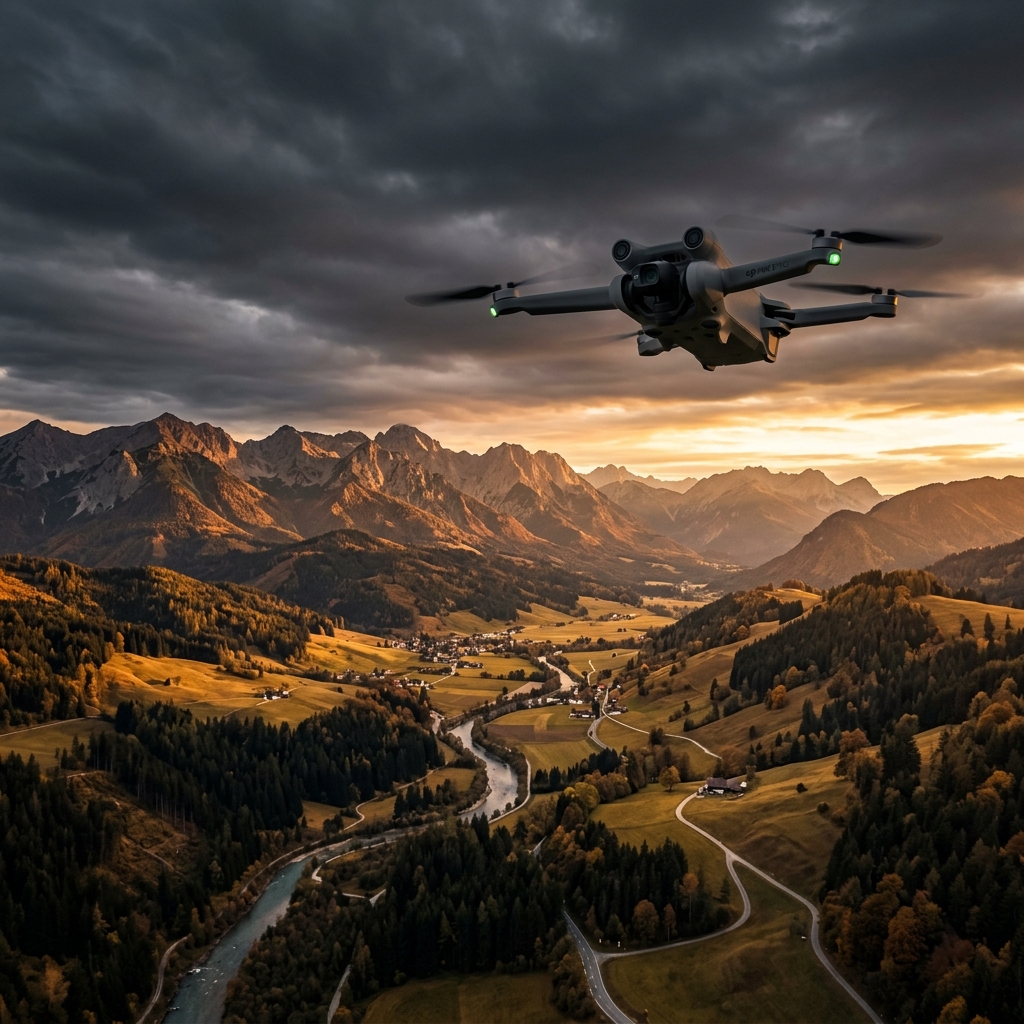
When you run a one-person business, every tool you add to your stack has to earn its place. You don't buy equipment on impulse. The test is simple: does this thing pay for itself across at least two or three different use cases?
A few people I know in the creator and freelance space have been telling me the same story lately. They bought their first drone. It changed the quality of their website, their proposals, and their social presence. Not because the footage was cinematic. But because one piece of hardware replaced a workflow that used to require a photographer, a videographer, and a stock subscription.
That got me thinking seriously about this category.
The Hidden Cost of Visual Production
Solo operators, freelancers, and independent creators share a common operational blind spot: the cost of producing visual assets is wildly high, and it's not optional.
The gap between a genuinely compelling cover image or an aerial shot of a finished project — and something pulled from a stock library that five of your competitors also used last Tuesday — is visible to clients on first glance. It's one of the fastest ways to lose a proposal before anyone reads a single word.
Outsourcing photography seems like the easy answer. But every time the location or the deliverable changes, you're back to scheduling, briefing, and paying again. It doesn't scale. And stock photos, at a certain point, start to look exactly like what they are.
A lightweight drone changes this entirely. You become the primary control point for your own visual production.
What You Actually Use It For
Setting aside the aerial photography hobby use case, here's what directly moves the needle for a solo operation:
Visual proof of delivery
If your work has a physical output — construction, landscaping, events, real estate, agriculture, anything with a site — aerial footage is the most efficient closing document you can produce. Two minutes of overhead footage communicates what a hundred ground-level photos take a full slideshow to explain.
Content marketing differentiation
Most of your competitors don't own a drone. Some do, but don't use it. Covering the same topic from an aerial perspective creates instant visual distinction with zero budget increase. It's one of the cheapest ways to build a content moat.
Homepage and landing page production
For digital products, online courses, or creative services, the visual quality of your homepage is a direct conversion variable. Original footage — especially footage you shot yourself — carries an authenticity that purchased asset packs cannot replicate. Visitors sense it even if they can't explain why.
Which Model to Buy: Prioritize Portability Over Specs
There's one first-principle that matters for solo operators choosing a drone: the probability that you'll bring it along determines its actual output.
A drone that folds into a backpack, clears security without drama, and holds a charge through an entire shoot is more valuable than one with a higher sensor spec that you leave at home because it's too heavy to bother with.
DJI has consistently been the brand with the clearest product lineup for working operators — from the Mini series (genuinely pocketable, under most registration thresholds) to the Air series (more power for serious production work). The price range is also wider than most people expect.
If you want to compare current models, specs, and bundles in one place without reading ten reviews first, the DJI USA product catalog is well-organized by use case with accessory recommendations alongside each model.
A Simple Decision Framework
You don't need to decide today. Ask yourself three questions first:
1. In the past twelve months, has a missing photo or missing video caused a proposal, a content piece, or a homepage to underperform? 2. If yes, how many times? What was your workaround cost each time — in time, money, or missed opportunity? 3. How many of those situations would a compact drone have solved, and how quickly does that math close against the purchase price?
For most operators who are serious about content or client-facing work, the calculation resolves cleanly.
Summary
I don't write gear recommendations often. But the tools worth recommending are the ones with a clear before-and-after — where ownership of the capability changes what you can produce, not just how fast.
For the right solo operator, a compact drone is exactly that kind of tool. Stop renting the output. Start owning the capability.
*Affiliate disclosure: This article contains a commission link. Using it to purchase supports this site at no additional cost to you.*